Autonomy / TAVX360 EDITORIAL
Autonomous cars explained: what changes beyond the driver?
An autonomous vehicle is one part of a transportation service. The distinction between assistance and automated driving determines who must supervise the road, where the system can operate and what a business can actually offer.
Start with who performs the driving task
NHTSA distinguishes driver assistance from automated driving. Assistance can help with parts of a trip while the human remains responsible. Higher levels of automation have different responsibilities and operating conditions. A product name alone does not establish the system’s capabilities or legal operating status.
For a fleet plan, write down who monitors the road, who responds when the system cannot continue, and which roads and conditions are supported. Tesla describes consumer Full Self-Driving as supervised and requiring an attentive driver. A supervised car-sharing trip should be planned around that responsibility.
The work moves into a wider operating system
Charging, cleaning, maintenance, customer support, accessible boarding and incident response still require a plan. Software may change scheduling and vehicle coordination; it does not remove those practical requirements. The useful question is which task the technology improves and how that improvement can be measured.
Consider a customer who needs a predictable trip between a commuter station and a workplace. Before considering automated operation, establish demand, parking rights, energy availability, insurance, supervision and a reliable return journey. Track completed trips, cancellations, downtime and cost per occupied trip.
Build a pathway around what is available
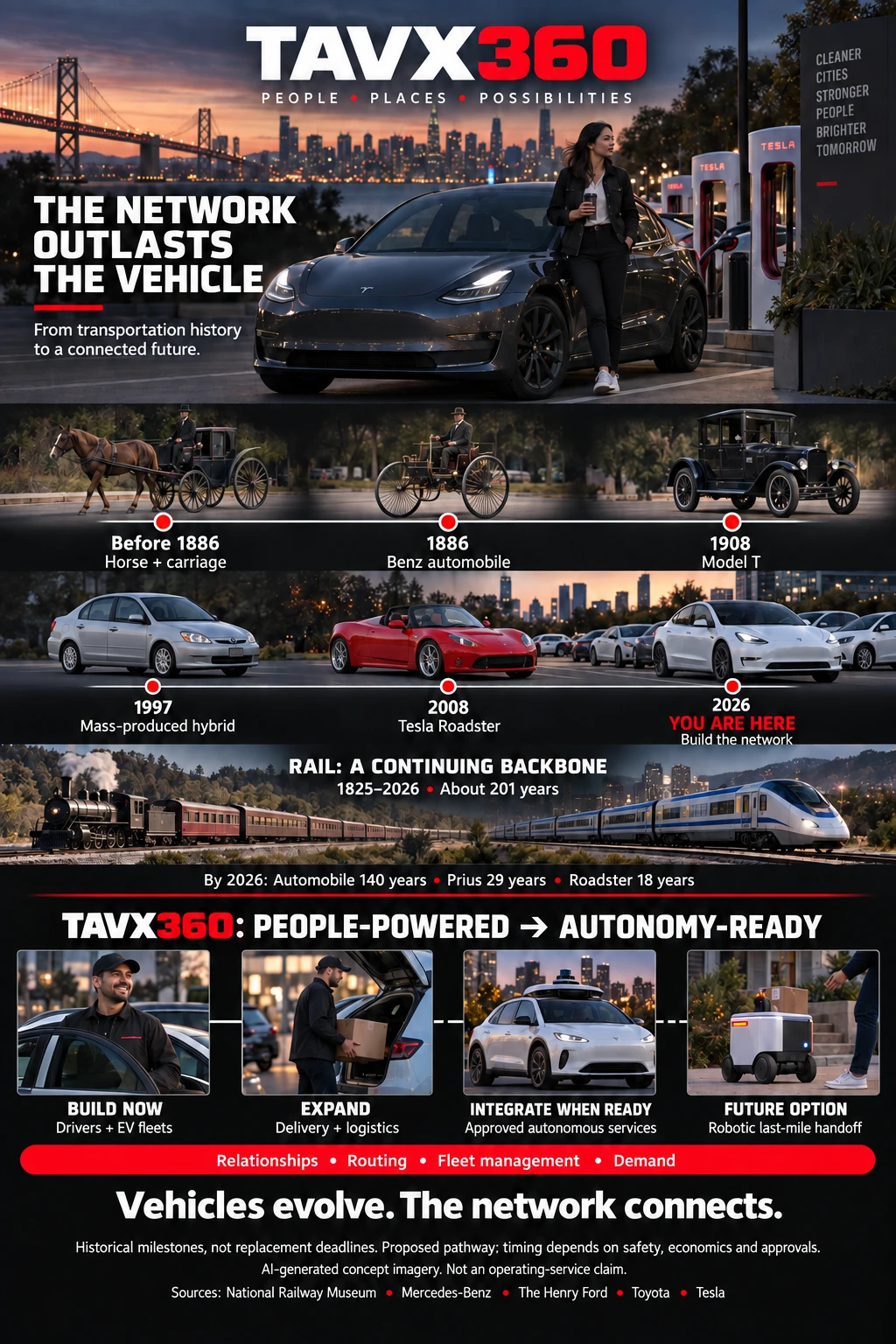
A rental fleet, charging location or maintenance partnership can be evaluated as a present operating business. A future autonomous service needs a separate readiness assessment: platform access, vehicle suitability, operating authorization, service territory and commercial terms. Treat future income as a scenario until those conditions are confirmed.
TAVX360’s planning approach connects the technology story to a specific customer and site. Use the fleet planner to compare assumptions, then verify them through a small pilot. The goal is a repeatable service with documented costs, rather than a vehicle purchase based solely on a prediction.